Perception2019
Facial symmetry and perceived attractiveness
Bilateral symmetry remains a weak predictor of attractiveness once skin quality is controlled.

Maximum, est. 2026
Maximum is the only aesthetic platform built on peer-reviewed research, with measurable outcomes tracked across a full year. Not a report. A program.
A short manifesto
The golden ratio is a Renaissance heuristic, not a research finding. Modern aesthetic science has moved on. Most tools have not.
A one-time report tells you where you are. It cannot tell you whether anything is changing, in which direction, or how fast.
If a recommendation cannot be traced to a published study, it is an opinion. Opinions are not protocols.
Why this matters
Decades of research, from labor economics to social psychology, point the same direction. How you look quietly compounds across every room you walk into.
Multiple labor economics studies, including Hamermesh's foundational work, place the lifetime wage premium for above-average appearance at 10–15%. The effect persists across industries and after controlling for education.
Hiring managers consistently rate identical résumés higher when paired with a stronger photo. Perceived competence is judged in under 100 milliseconds, and that judgment anchors every interaction that follows.
Across major dating platforms, the top 10% of profiles by photo quality receive the majority of matches. Optimizing the photo, not the bio, is the highest-leverage move you can make.
The halo effect is one of the most replicated findings in social psychology: attractive people are assumed to be more intelligent, more trustworthy, and more competent — before they say a word.
Self-perceived attractiveness predicts willingness to negotiate, ask for help, and enter unfamiliar rooms. Looking better is downstream of skill. Acting bigger is downstream of looking better.
Skin quality, posture, and hair density are external signals of internal status. Improving them improves the underlying systems too — sleep, sun exposure, stress, training, nutrition.
Sources include Hamermesh & Biddle (American Economic Review), Langlois et al. (Psychological Bulletin meta-analysis), and Willis & Todorov (Psychological Science). Full citations ship with your plan.
A photo essay
Drag the slider on each portrait. Each subject began with a 100-point biometric scan and followed a personalized protocol. Scores measured at month zero, six, and twelve. All subjects consented to share. Individual results vary.


Subject 01, age 28
Tretinoin protocol, lateral brow grooming, postural rehab. Twelve months.


Subject 02, age 34
Topical hair density routine, beard protocol, daily SPF. Twelve months.
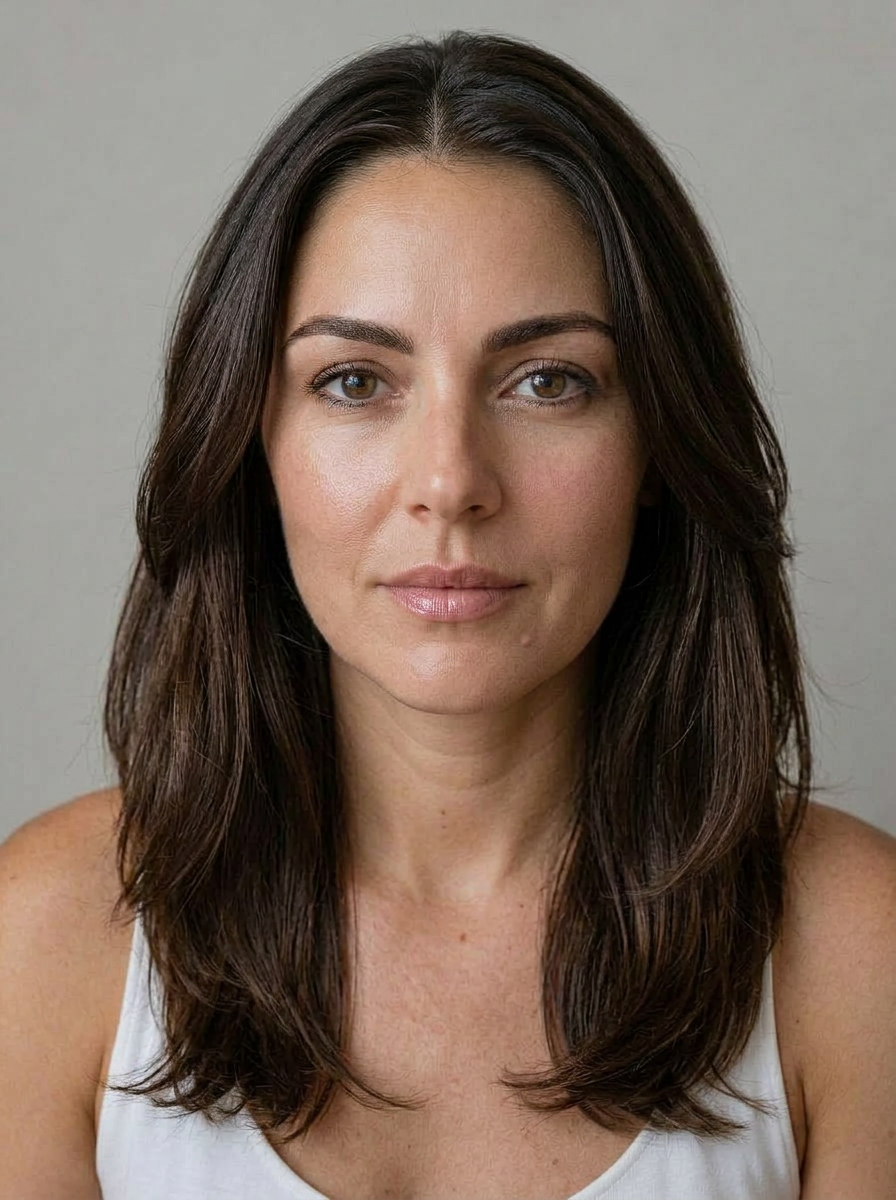

Subject 03, age 31
Pigmentation correction, brow shaping, hair conditioning protocol. Twelve months.


Subject 04, age 26
Acne resolution, postural correction, hairline grooming. Twelve months.
All subjects provided written consent for use of their photographs and scan data. Results are individual and not guaranteed.
The evidence
Every protocol traces back to a citation. Every score traces back to a method. The full reading list ships with your plan.
Others cite general aesthetic principles. We cite the papers.
What you get
A full biometric scan of skin, structure, hair, and proportion. Scored, not vibed.
A personalized protocol with sequenced interventions and expected timelines.
Progress measured every 90 days. Scores tracked across the year.
Visualizations of where your scores are likely to land at six and twelve months.
Direct messaging with the practitioners who built your plan.
A full re-scan each year so the plan adapts as you do.
Skin, hair, grooming, and posture, each backed by published research.
How it works
A 100-point biometric capture done from your phone in under ten minutes.
Your care team builds a sequenced 12-month protocol with cited references.
Re-scan every 90 days. Watch your scores move. Adjust as the data comes in.
The honest comparison
You can run a tracked, science-backed program. You can buy a one-off report from someone else. Or you can do nothing and hope. Here's what each looks like, side by side.
Peer-reviewed studies in dermatology, aesthetics, and behavioral science
100+ point biometric scan across skin, structure, hair, and proportion
Personalized 12-month protocol covering skin, hair, grooming, and posture
Quarterly re-scans, scores tracked across the year
Direct messaging with the practitioners who built your plan
Annual program with re-analysis each year
Measurable, documented improvement on a 100-point scale
General aesthetic principles, golden-ratio heuristics, anonymous opinions
Single-pass photo report or generic AI face score
PDF of suggestions, mostly skincare-only
One-time report. No follow-up.
Email a generic inbox, or none
One transaction, then you're on your own
Unverified. No measurement built in.
Whatever you absorbed from social media
The mirror
No plan
Guesswork
Forums and influencers
Indefinite
Drift in the wrong direction
Pricing
Annual membership
Everything in the Maximum program. One scan to start, three to track, one to renew.
Begin your scan→14-day money-back guarantee.
Skin, hair, and structure change on quarterly timelines, not weekly. An annual subscription matches the biology.
No. Maximum is a non-surgical platform. We build protocols around evidence-backed topical, behavioral, and grooming interventions.
Most options give you a one-time report built on general aesthetic principles. Maximum is a tracked, year-long program built on cited studies, with quarterly re-scans and ongoing adjustments.
Every plan includes a 14-day money-back guarantee from your first scan.
Your scans are encrypted at rest and never used to train external models.

Behind the platform
Dr. Placeholder Name is a board-certified dermatologist with research appointments at two academic medical centers. Maximum's protocols pass through a clinical review board before they reach a single subscriber.
Dr. Placeholder Name, MD, PhD
Chief Science Officer, Maximum